
Culture, Religion and Mountains
Pakistan, a land of diverse landscapes and rich history, captivates with its wonders. Imagine the lush green fields of Swat Valley, where crystal-clear rivers wind through picturesque villages. Visualize the majestic peaks of Hunza Valley, their snow-capped summits contrasting with terraced fields below. Pakistan’s beauty transcends mere visuals; it’s an experience that touches the soul.
go
The best time to visit Pakistan depends on your preferences and the regions you want to explore. Here are some recommendations:
Northern Mountains and Karakoram Highway (April to October): During the Pakistani summer (April to October), head north to regions like Gilgit-Baltistan, Hunza, Chitral, and Skardu. The weather is comfortable, and high pastures are at their peak. However, be prepared for hot temperatures (up to 40°C) while transiting through Islamabad or Rawalpindi.
Sindh and Punjab (November to March): Winter is ideal for exploring Sindh and the Punjab region. The weather is pleasant, and it’s a great time to visit cities like Karachi, Lahore, and Multan.
Combining Mountains and Plains (October and November): These months offer cooler weather, fewer crowds, and appealing shoulder-season discounts at hotels. It’s a good time to explore both the mountains and the lowlands.
Trekking in the North (July and August): If you’re into trekking, visit during July and August. Accommodation prices peak during these months, but the cool hills provide a refreshing escape from the southern heat.
do
Here are some must-do attractions:

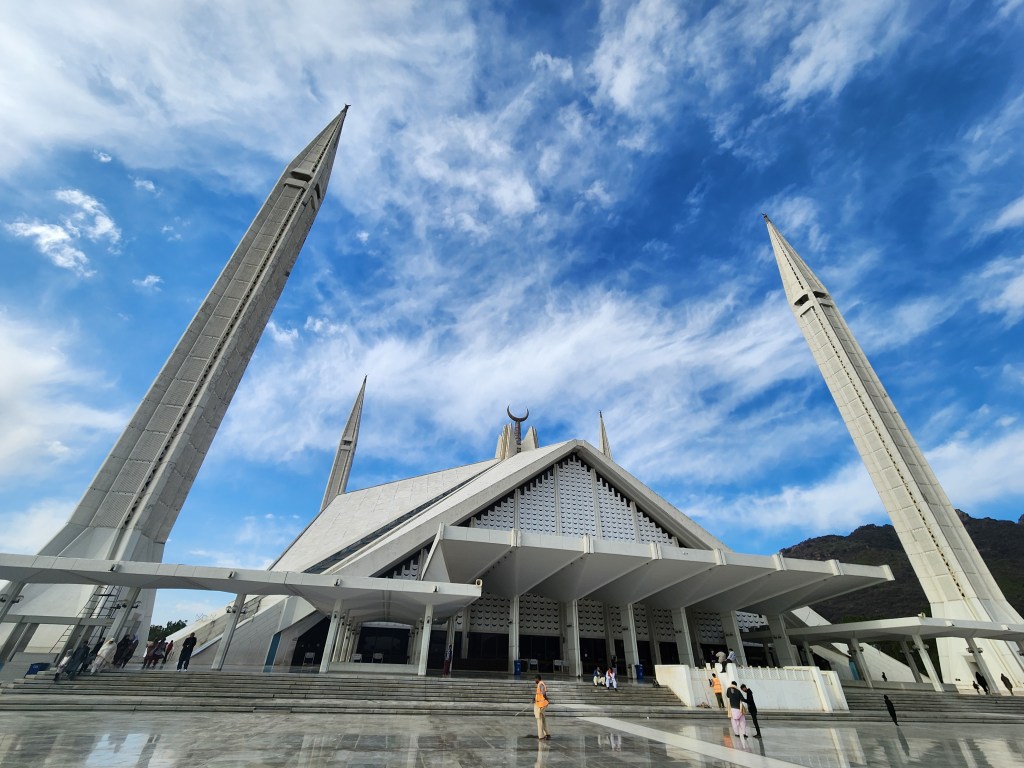
Faisal Mosque: Located in Islamabad, the Faisal Mosque is an architectural masterpiece. Its modern design and vast prayer hall make it an iconic landmark. The mosque’s backdrop against the Margalla Hills adds to its allure.

Margalla Hills National Park: These lush hills surround Islamabad, offering hiking trails, scenic viewpoints, and abundant wildlife. Daman-e-Koh, a viewpoint within the park, provides breathtaking panoramic views of the city and Rawal Lake
Rawal Lake: A serene reservoir near Islamabad, Rawal Lake is perfect for picnics, boating, and birdwatching. The Margalla Hills form a picturesque backdrop, making it an ideal escape from the city hustle.

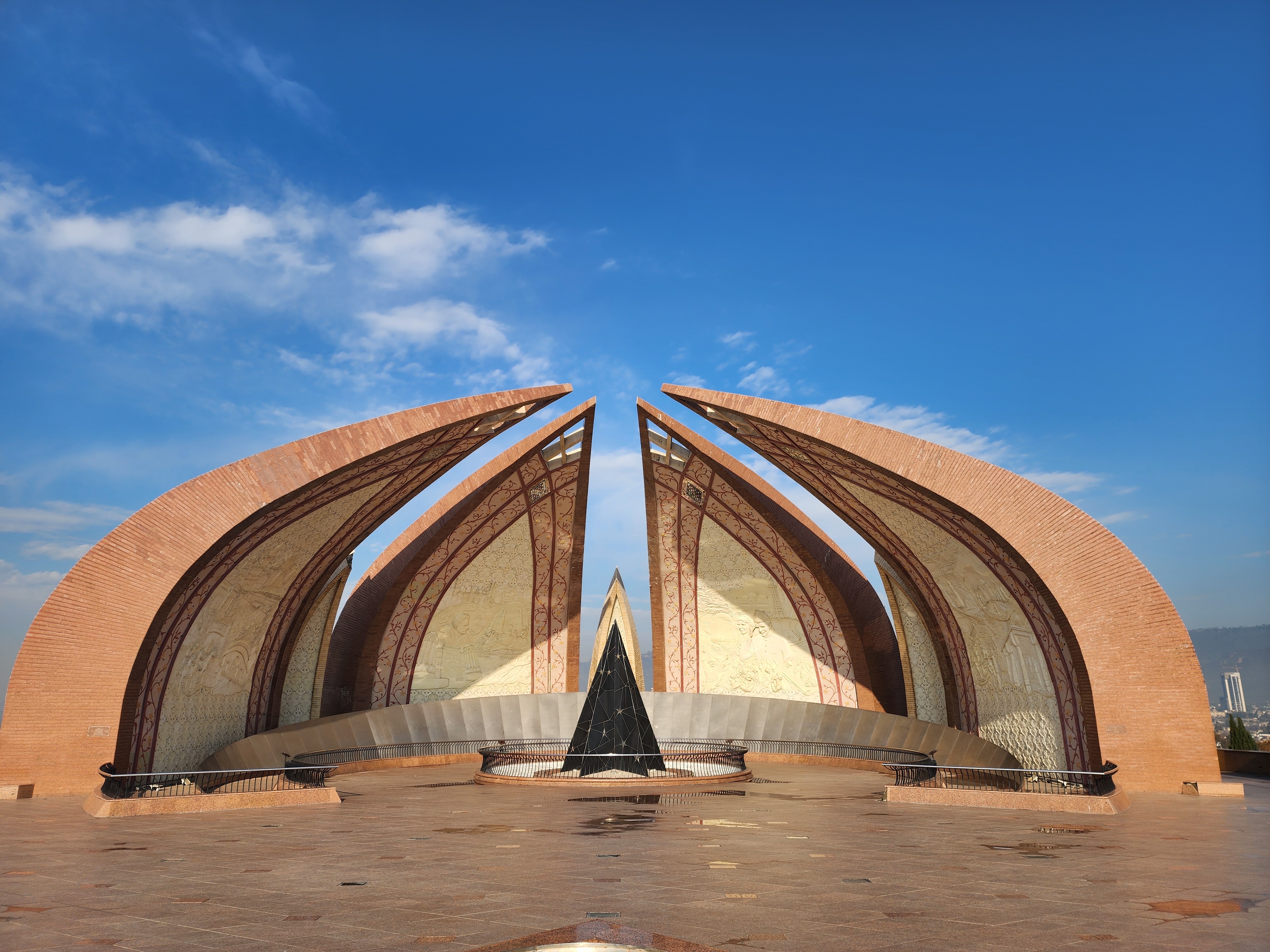
Pakistan Monument: This impressive structure represents the four provinces of Pakistan and three territories. It stands as a symbol of national unity and pride. The view from the top is spectacular, especially during sunset.

Air Safari Flight: For a unique experience, take an Air Safari Flight over Islamabad. Capture stunning aerial views of the Margalla Hills, Rawal Lake, and the iconic Faisal Mosque. It’s a photographer’s dream come true.
eat
Here are some must-try Pakistani foods:

Biryani: Fragrant yellow rice cooked with chicken or beef, infused with spices and herbs. It’s often garnished with lemons, tomatoes, and potatoes.

Chicken Tikka: Grilled chicken marinated in traditional spices, served with mint dressing.
Seekh Kabab: Well-seasoned beef skewers, grilled to perfection. Pair them with herb-infused rice.

Channa Chaat: A light snack made with chickpeas, tomatoes, onions, and a bittersweet dressing.

Aloo Keema: A simple yet delicious blend of potatoes and minced mutton or chicken curry.

Samosas: Triangular pastries filled with green chilies, herbs, and boiled potatoes. They’re so flavorful that you might skip the main course!

Sajji: A Balochistan specialty—large pieces of lamb or chicken stuffed with rice, topped with green papaya paste, and roasted on skewers.

Haleem: A slow-cooked mixture of wheat, barley, minced beef, mutton, or chicken, spiced to perfection.
tips
Here are some essential travel tips to keep in mind:

Currency: The official currency in Pakistan is the Pakistani rupee (PKR). It was officially adopted by the Government of Pakistan in 19491. As of the latest exchange rate, 1 US dollar (USD) is equivalent to approximately 277.82 Pakistani rupees (PKR)2. When traveling, consider exchanging your currency at local banks or authorized exchange offices.

ATMs and Currency: ATMs are available in major cities, but in the north (Gilgit), there are limited options. Bring USD or Euros to exchange. If crossing the border to China, get some Chinese RMB before Sost. Also, carry photocopies of your passport and visa.

Visa and Invitation: Most foreigners need a visa to enter Pakistan. Apply online through the e-visa system and obtain a letter of invitation from a local hotel, host, or travel agent. Contact your local Pakistani embassy for details.

Ramadan Challenges: If you travel during Ramadan, be prepared. Most restaurants close during the day, and Muslims fast from dawn to dusk. Carry your own food during daylight hours and avoid eating in public during fasting times.

Drink Bottled Water: Stick to bottled water to avoid any health issues. Hydrate well, especially in warm weather.
 ameropasstravel.com